
Your needs, this model
Does it fit your priorities?
Can I require rechargeable pet-approach sensor flow?
Yes. The PLWF115 battery setup uses its approach sensor. Follow placement guidance and do not assume the back detects an approach.
Explore this need in the finder →Can I require continuous flow while running on the battery?
No. Continuous Regular mode requires external power; its battery plan is sensor-only. Those two plans cannot be combined.
Explore this need in the finder →Can I require a reservoir free of electrical components when lifted off?
No. The exact guide places a wireless electrical pump inside the tank. The detachable base does not remove that pump from the wet reservoir.
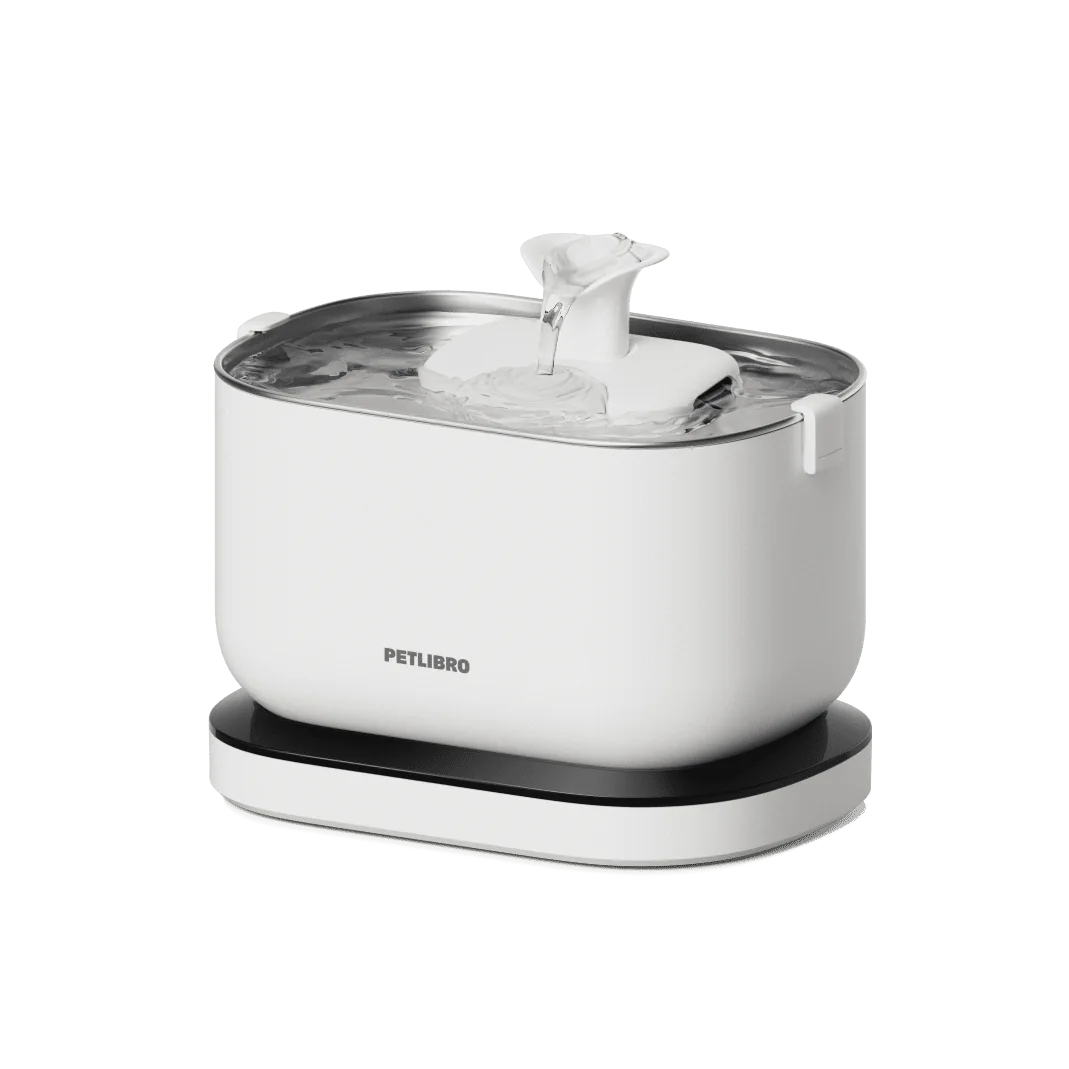
Explore this need in the finder →The PETLIBRO Dockstream Cordless PLWF115 suits someone who wants a rechargeable drinking station without making app tracking part of the purchase. Its most important limitation is easy to miss: the exact guide permits continuous flow only with external power, while battery operation uses a pet-approach sensor. Those are separate operating plans, not two independent features that can be combined freely.
Battery and continuous flow do not coexist here
The guide describes a 5000 mAh battery and a 2.5-liter tank. In unplugged operation, an approach triggers a forty-two-second water cycle. With external power connected, Regular mode provides continuous flow. If you need both an unplugged location and uninterrupted circulation, this exact configuration does not establish that combination.
The Dockstream 2 Cordless PLWF116 is a different generation with its own documented modes and battery. Do not transfer its 5200 mAh figure or app features to the PLWF115. A product family's shared Dockstream name is not a sufficient bridge between those configurations.
Place the sensor as carefully as the bowl
The PLWF115 guide describes a three-sided, 180-degree sensing area and notes that the back does not sense a pet. It recommends placing the back against a wall to reduce approaches from that blind side. That makes sensor placement a meaningful part of installation, rather than simply putting the fountain wherever there is floor space.
Observe actual activation after choosing the position. A cat approaching from an unexpected angle may not use the intended sensing area. The manufacturer's battery-life language should also be read as a conditional claim, not a measured result from this review or a guarantee for every household's activity.
A wireless pump is still inside the reservoir
The tank lifts from a base without a conventional power lead attached to the wet pump. However, the guide explicitly identifies a wireless electrical pump inside the tank. That is different from the electronics-free reservoir arrangement on the Catit 43621 or the newer Dockstream 2.
The removable steel drinking tray sits above an ABS reservoir and an integrated plastic filter tray. A stainless drinking surface does not establish an all-steel water path. The pump, foam filter, silicone pipe and impeller still need correct assembly and cleaning, even when carrying the tank to a sink is convenient.
This is the simpler, non-tracking Dockstream choice
The current page and exact guide describe local low-battery and water-level indicators, with automatic shutdown for insufficient water. They do not establish the connected intake-recording features of the newer Smart models. If app-based records are essential, compare the PLWF106 plug-in or PLWF116 cordless model instead.
Basic local indicators can be enough for a household that checks the station directly. They still require a person to refill, recharge and inspect operation. Reservoir capacity and a low-water warning do not establish a safe unattended interval for an animal.
Dishwasher instructions conflict
The exact guide permits the steel tray and its inseparable plastic part in a dishwasher while excluding other parts. The current product FAQ says all parts are not dishwasher safe. We preserve that conflict and leave dishwasher suitability unconfirmed. Do not buy on a dishwasher assumption until PETLIBRO clarifies the exact applicable version; hand-clean according to the supplied instructions in the meantime.
The guide recommends cleaning the pump and fountain and replacing its filters at least every two weeks, with condition and use potentially requiring earlier attention. It shows removing the impeller and cleaning small passages. Merely replacing water does not perform that maintenance.
This review is based on the official PLWF115 page and visually read exact guide, without hands-on testing or medical claims. Compare rechargeable sensor-flow fountains, or compare continuous outlet-powered setups. Keep those two PLWF115 operating plans separate.
Key details at a glance
| Reservoir and capacity limits | The exact PLWF115 guide and current page specify 2.5 L, distinct from the newer 3 L Dockstream 2. |
|---|---|
| Power arrangement | 5000 mAh rechargeable main battery, or supplied external 5 V, 1 A power. Do not substitute the newer model's 5200 mAh specification. |
| Water flow and conditions | Battery operation supports sensor activation only, with a 42-second water cycle. Continuous Regular mode is supported only on external power. The sensor covers three sides, not the back. |
| Drinking surface and wet parts | Steel drinking tray above an ABS tank with an integrated plastic filter tray. A wireless electrical pump sits inside the reservoir; wireless does not mean an electronics-free tank. |
| Cleaning and source limitations | The exact guide permits the steel/inseparable-plastic tray in a dishwasher, but current page FAQ excludes all parts. Permission remains unknown. Clean pump/fountain and replace filters at least every two weeks or earlier as needed. |
| App and observation limits | Local low-battery and water-level indicators with insufficient-water shutdown. Connected intake records and Wi-Fi controls are not established. |
Use the exact model’s instructions for operating limits, supplied equipment and version differences.
Sources for this assessment
Find the configuration your household needs.
Start with power and water flow, then add surface, cleaning and observation requirements.