
Your needs, this model
Does it fit your priorities?
Can I require single-pet app records, dual-band Wi-Fi and an electronics-free lift-off reservoir?
Yes. Those features coexist on the exact plug-in PLWF106. Set up and calibrate the base correctly; intake records are observations, not diagnoses.
Explore this need in the finder →Can I require rechargeable operation away from an outlet?
No. The PLWF106 plug-in configuration has no battery; the PLWF116 is a separate model.
Explore this need in the finder →Can I require confirmed dishwasher permission for the drinking tray?
Not while the exact US guide and current page conflict. The guide also says the steel tray and plastic filter tray cannot be separated.
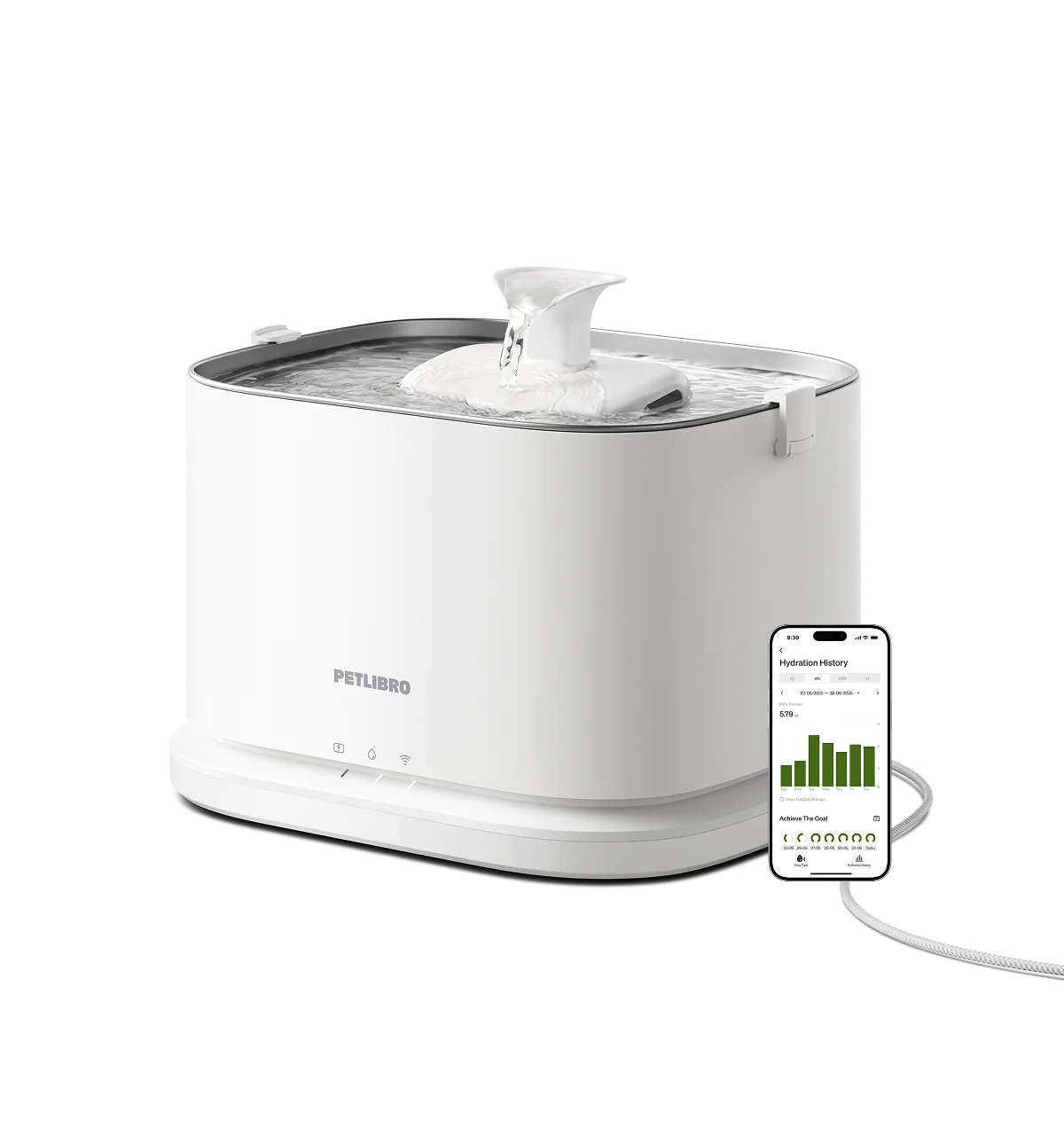
Explore this need in the finder →The PETLIBRO Dockstream 2 Smart Fountain PLWF106 is the plug-in choice for someone who wants app-based drinking records and an easy-to-lift reservoir without managing a rechargeable battery. It has the same broad family appearance as the cordless PLWF116, but the power source is a real model difference. Choose it only where an appropriate outlet and network connection suit the intended location.
Plug-in means no battery operating plan
The exact US manual identifies PLWF106, also listed as 6236106, and the current product page provides a separate corded specification table. It does not have the 5200 mAh battery of the PLWF116 cordless model. A shared product page or photograph must not make the plug-in version pass a cordless requirement.
For this configuration, PETLIBRO describes continuous or timed water flow. That suits a fixed drinking station where you want to choose a schedule through the app. It does not create pumping during an outage. Consider whether the location, cord routing and access for lifting the tank make a fixed station convenient in daily use.
Three liters and a separate dry base
The US guide specifies a 3-liter tank, ABS construction and a stainless steel drinking tray. The electrical motor stays in the base while a wet rotor and pipe form part of the removable water assembly. The term pumpless describes the tank arrangement, not an appliance that moves water without a motor.
This separation can make carrying the tank to a sink easier. It still leaves a rotor, pipe, filters and a combined tray assembly to clean. The guide says the stainless drinking tray and plastic filter tray cannot be separated. That matters when interpreting cleaning claims and when deciding how easily you can reach every wet surface.
Tracking is for one pet at a time
The current product describes water-intake and drinking-session records in the PETLIBRO app, along with refill, cleaning and filter reminders. Its FAQ says the Dockstream 2 tracks one pet at a time. Adding profiles or a subscription does not establish automatic identification of several cats using this same hardware.
For that task, compare the Dockstream RFID PLWF305, whose approach depends on compatible collar tags and a restricted drinking position. An intake record is a household observation aid, not a medical diagnosis. Changes still need appropriate human attention rather than an assumption that the fountain can explain their cause.
Set up the base before filling
The US guide calls for calibrating the empty base on a flat surface. It also shows routing the power cable through a bottom slot for accurate water-level monitoring. Those details are relevant if the appeal is the displayed data: a poorly positioned base or an interfering cable can undermine the intended setup.
The guide supports 2.4 and 5 GHz Wi-Fi and distinguishes the PETLIBRO app from the similarly named Lite app. Check the connection where the fountain will stand. We have not independently measured intake accuracy, sound level or notification reliability, so the assessment does not turn the manufacturer's tracking language into a tested precision claim.
Resolve dishwasher permission before relying on it
The current product page calls the stainless tray dishwasher safe. The exact linked US PLWF106 manual, however, says not to clean any parts in a dishwasher. With the steel tray and plastic filter tray integrated, this is a material instruction conflict. We leave dishwasher suitability unconfirmed and recommend following the exact supplied instructions or obtaining model-version clarification from PETLIBRO.
Cleaning intervals also need context: the guide's safety section gives weekly tank/internal cleaning and filter replacement, while the indicator and current page refer to a fourteen-day filter interval. Inspect condition and follow the applicable exact guide; an app reminder does not certify a filter remains usable until its next alert.
This review is based on the official US page and visually read PLWF106 guide, without hands-on use. Compare outlet-powered single-pet tracking fountains with dual-band Wi-Fi and a lift-off reservoir. Read the cleaning conflict before making dishwasher care an essential reason to buy.
Key details at a glance
| Reservoir and capacity limits | Exact US PLWF106 guide specifies 3 L. The full reservoir is not an unattended-time promise. |
|---|---|
| Power arrangement | Corded main fountain, with no battery in the plug-in specification. Supplied adapter input 100–240 V AC, 50/60 Hz; output 5 V, 1 A. |
| Water flow and conditions | The plug-in product description offers continuous or timed circulation. The motor stays in the base while a wet rotor and pipe remain in the lift-off reservoir. |
| Drinking surface and wet parts | Steel drinking tray above an ABS tank. The guide says the steel tray and plastic filter tray are integrated and cannot be separated. |
| Cleaning and source limitations | Current page says the steel tray is dishwasher safe, but exact US guide printed page 10 says no parts in a dishwasher. Permission remains unresolved. Keep the electrical base dry and follow exact supplied instructions or obtain clarification. |
| App and observation limits | App intake and session records for one pet at a time, with reminders and dual-band Wi-Fi. Calibrate the empty base and route its cable as instructed. Profiles do not provide multi-cat identification. |
Use the exact model’s instructions for operating limits, supplied equipment and version differences.
Sources for this assessment
Find the configuration your household needs.
Start with power and water flow, then add surface, cleaning and observation requirements.